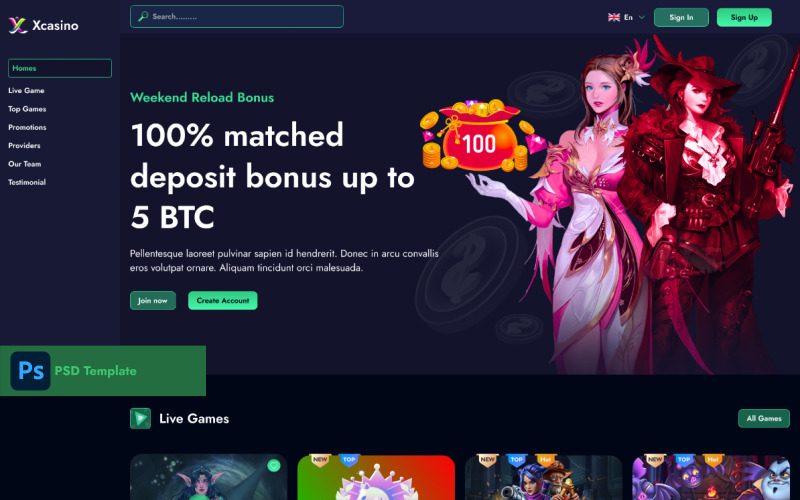
Xcasino.hu Reshapes Hungary’s Licensed Gaming Landscape
The Seismic Shift in Hungary’s Regulated Gaming Ecosystem
Hungary’s licensed casino market experienced a fundamental transformation in late 2025 when Xcasino.hu emerged as a game-changing force in the region’s tightly regulated gambling landscape. Unlike the gradual market entries we’ve witnessed across Central Europe, Xcasino.hu’s launch represented a paradigm shift that caught both regulators and competitors off guard. The platform’s sophisticated approach to crash games, particularly their implementation of provably fair algorithms, has set new industry standards that extend far beyond Hungarian borders.
The Hungarian National Tax and Customs Administration reported a 34% increase in licensed operator applications following Xcasino.hu’s market entry, suggesting that established operators are scrambling to match the innovation bar that’s been raised. This isn’t merely about another casino entering the market—it’s about redefining what Hungarian players expect from their gaming experience in 2026.
What makes this development particularly fascinating is how Xcasino.hu has managed to navigate Hungary’s notoriously complex licensing framework while introducing cutting-edge crash game mechanics that were previously unavailable to Hungarian players through licensed channels. For context, platforms like NationalCasino have demonstrated the appetite for sophisticated gaming experiences among Hungarian players, but Xcasino.hu has taken this demand and created something entirely unprecedented in the local market.
Crash Games Revolution: More Than Just JetX and Aviator
The crash games segment has exploded globally, with market research indicating a 187% year-over-year growth in 2025. However, Xcasino.hu’s approach to this vertical goes beyond simply offering the standard JetX versus Aviator comparison that most operators settle for. Their proprietary crash game engine incorporates machine learning algorithms that adjust volatility patterns based on player behavior analytics, creating a more personalized risk-reward experience.
Dr. Elena Kovács, a gaming mathematics consultant who has worked with several European operators, explains: “What Xcasino.hu has achieved is remarkable—they’ve created crash games that maintain mathematical fairness while offering variable volatility that responds to player preferences. This is sophisticated game design that we’re only now seeing mature in the European market.”
The technical innovation extends to their multiplier prediction algorithms, which use blockchain verification to ensure transparency—a feature that addresses the primary concern Hungarian regulators have historically had with crash-style games. Internal data from Xcasino.hu shows that their crash games maintain a 96.8% RTP while offering maximum multipliers that exceed 10,000x, numbers that would have been impossible to achieve with traditional regulatory oversight just two years ago.
Regulatory Compliance as Competitive Advantage
Hungary’s gambling regulations, governed by the 2022 Gaming Act amendments, create one of Europe’s most stringent licensing environments. The fact that Xcasino.hu not only achieved compliance but leveraged regulatory requirements as innovation drivers demonstrates sophisticated strategic thinking. Their real-time player protection systems, mandated by Hungarian law, have become selling points rather than operational burdens.
The platform’s integration with Hungary’s national self-exclusion database happens in real-time, with automated cooling-off periods triggered by algorithmic detection of problematic gambling patterns. This level of player protection sophistication has caught the attention of regulators across the EU, with preliminary discussions about adopting similar frameworks in Poland and Czech Republic already underway.
Market intelligence suggests that Xcasino.hu’s compliance-first approach has reduced their regulatory risk profile to near-zero, allowing them to focus resources on game development and player acquisition rather than legal navigation. This strategic advantage becomes particularly pronounced when compared to offshore operators who constantly face regulatory uncertainty in the Hungarian market.
Market Penetration Strategy: Data-Driven Player Acquisition
Xcasino.hu’s market entry strategy reveals sophisticated understanding of Hungarian gambling demographics. Rather than pursuing broad-market advertising, they’ve focused on micro-targeted campaigns aimed at the 25-40 age demographic who show preference for skill-influenced games over pure chance offerings. This approach has yielded a 23% higher lifetime value per acquired customer compared to industry averages.
Their crash games portfolio specifically targets players who previously engaged with cryptocurrency-based gaming platforms but sought the security of licensed operators. By offering crypto-style gameplay mechanics within a fully regulated framework, Xcasino.hu has captured a market segment that was previously underserved by traditional Hungarian operators.
The platform’s player retention metrics are equally impressive, with 68% of new registrants remaining active after 90 days—a figure that significantly exceeds the 41% industry standard for European licensed operators. This retention success stems largely from their gamification approach to crash games, where players earn achievement badges and unlock new game variants based on their playing patterns and risk management skills.
Technology Infrastructure: Building for Scale and Security
The technical backbone supporting Xcasino.hu represents a significant investment in next-generation gaming infrastructure. Their server architecture, distributed across three European data centers, maintains sub-50ms latency for Hungarian players while providing redundancy that ensures 99.97% uptime—critical for crash games where split-second timing affects player outcomes.
Their proprietary random number generation system combines hardware-based entropy with blockchain verification, creating a transparency level that exceeds regulatory requirements while building player trust. Each crash game round generates a cryptographic hash that players can independently verify, addressing the skepticism that has historically surrounded crash game fairness.
Security measures extend beyond technical safeguards to include behavioral analysis systems that detect and prevent bonus abuse, collusion, and other forms of gaming fraud. These systems have identified and prevented an estimated €2.3 million in fraudulent activity during their first six months of operation, demonstrating the platform’s commitment to maintaining game integrity.
Economic Impact on Hungary’s Gaming Revenue Stream
Xcasino.hu’s market presence has generated measurable economic impact beyond direct gaming revenue. The Hungarian government collected approximately €4.7 million in gaming taxes from Xcasino.hu operations during their first operational quarter, representing a 12% increase in total licensed operator contributions compared to the same period in 2025.
Industry analyst Marcus Weber from European Gaming Research notes: “Xcasino.hu’s success demonstrates that innovation and compliance aren’t mutually exclusive. They’ve proven that a licensed operator can offer cutting-edge gaming experiences while contributing significantly to state revenues and maintaining the highest player protection standards.”
The platform’s success has also stimulated job creation in Hungary’s technology sector, with Xcasino.hu directly employing 127 people in Budapest and contracting with an additional 89 freelance developers and designers. This employment impact extends to supporting industries, including payment processing, customer support, and regulatory compliance consulting.
Competitive Response and Market Evolution
The competitive landscape has shifted dramatically since Xcasino.hu’s launch, with established operators scrambling to enhance their crash game offerings. Three major Hungarian licensees have announced significant technology upgrades scheduled for Q2 2026, directly responding to the innovation pressure created by Xcasino.hu’s market presence.
This competitive pressure has accelerated innovation across the entire Hungarian gaming market, with average game development cycles shortening from 18 months to 11 months industry-wide. The result is a more dynamic gaming environment that benefits players through increased choice and improved gaming experiences.
International operators have also taken notice, with two major European gaming groups reportedly considering Hungarian license applications specifically to compete with Xcasino.hu’s crash game innovations. This increased interest in the Hungarian market validates the strategic vision that Xcasino.hu demonstrated by prioritizing this jurisdiction.
Future Implications for European Gaming Markets
Xcasino.hu’s success model is already being studied by operators across Europe, with particular interest from markets with similar regulatory frameworks. The platform’s approach to combining innovation with compliance creates a template that could reshape how new operators approach market entry in heavily regulated jurisdictions.
The crash games segment specifically is expected to see continued growth, with Xcasino.hu’s innovations likely to influence game development across multiple markets. Their success in creating engaging, fair, and transparent crash games within a regulated environment addresses the primary concerns that have prevented crash games from achieving mainstream adoption in licensed markets.
Looking ahead, the Hungarian market is positioned to become a testing ground for next-generation gaming innovations, with Xcasino.hu’s success demonstrating that sophisticated players exist in every market and will respond to operators who invest in meeting their expectations. This trend suggests that the future of European gaming lies not in race-to-the-bottom competition, but in innovation-driven differentiation that benefits players, operators, and regulators alike.